ISLAMABAD: Pakistan could save more than $1 billion in gross fuel imports by adding around 30,000 range-extended electric vehicles (REEVs) annually for five years, according to industry analysts.
Thank you for reading this post, don't forget to subscribe!Under the scenario, the national REEV fleet would reach 150,000 vehicles, cumulatively replacing an estimated 1.2 billion litres of petrol and avoiding around 2.7 million tonnes of operational carbon emissions compared with an equivalent fleet of petrol-powered vehicles.
The actual savings and emissions reductions, however, would depend on factors including vehicle mileage, charging sources and the proportion of travel powered by electricity.
The broader economic case for electric mobility is also highlighted in “Future on Wheels”, a policy viewpoint published by the Pakistan Institute of Development Economics (PIDE) in December 2024 and authored by Dr Usman Qadir, Mohammad Shaaf Najib and Saddam Hussein.
The authors noted that petroleum imports account for a significant share of Pakistan’s import bill and argued that accelerating the adoption of electric vehicles could reduce the economy’s exposure to volatile international oil prices and foreign-exchange pressures.
“With petroleum imports consuming 30% of Pakistan’s total import bill, the transition to EVs is a macroeconomic imperative,” the report stated. It added that faster EV adoption could help reduce pressure on the current account by limiting the foreign-exchange outflow associated with global oil price shocks.
Industry stakeholders say REEVs could provide a practical transition option while Pakistan continues to develop its electric-vehicle charging infrastructure.
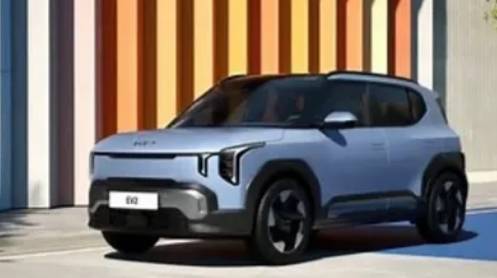
Unlike conventional battery-electric vehicles, REEVs use an electric motor to drive the wheels, while an onboard fuel-powered generator produces electricity when additional battery power is required.
Modern REEV models can reportedly travel around 150-180 kilometres on battery power under suitable conditions. This allows many daily journeys to be completed using electricity and home charging, while the onboard generator can provide additional range for longer trips.
The approach could reduce dependence on petrol for routine urban travel while addressing concerns over limited charging infrastructure and range.
For Pakistan, where transport remains a major consumer of petroleum products, wider adoption of REEVs could therefore have implications beyond the automotive sector, including fuel-import requirements, foreign-exchange demand and transport-related emissions.